
By Matt Tomkin, Editor, SaunaCentral — updated 27 July 2026.
In short: An infrared sauna warms your body directly with panels rather than heating the air, so it runs at 45–65°C instead of 70–95°C and costs about 35–55p a session against £1.20–£1.60 for a traditional electric sauna. Most home cabins plug into a standard 13A socket and need no ventilation, which is why they suit flats and tight spaces. The trade-off is the evidence: the strong cardiovascular research was done on traditional Finnish saunas, not infrared. Buy infrared for comfort, recovery and low install cost — buy traditional if the health evidence is your main reason.
Infrared saunas split opinion. They warm the body directly with infrared panels rather than heating the air the way a traditional Finnish sauna does, which means they operate at lower air temperatures (45–65°C versus 70–95°C) and use less electricity. The honest take: they’re a good fit for some buyers and a poor fit for others, and the marketing tends to oversell both ends.
This guide covers what’s actually different about infrared, what the evidence says about the health claims, who they suit, and what UK-available units we’d consider in 2026.
How infrared saunas work
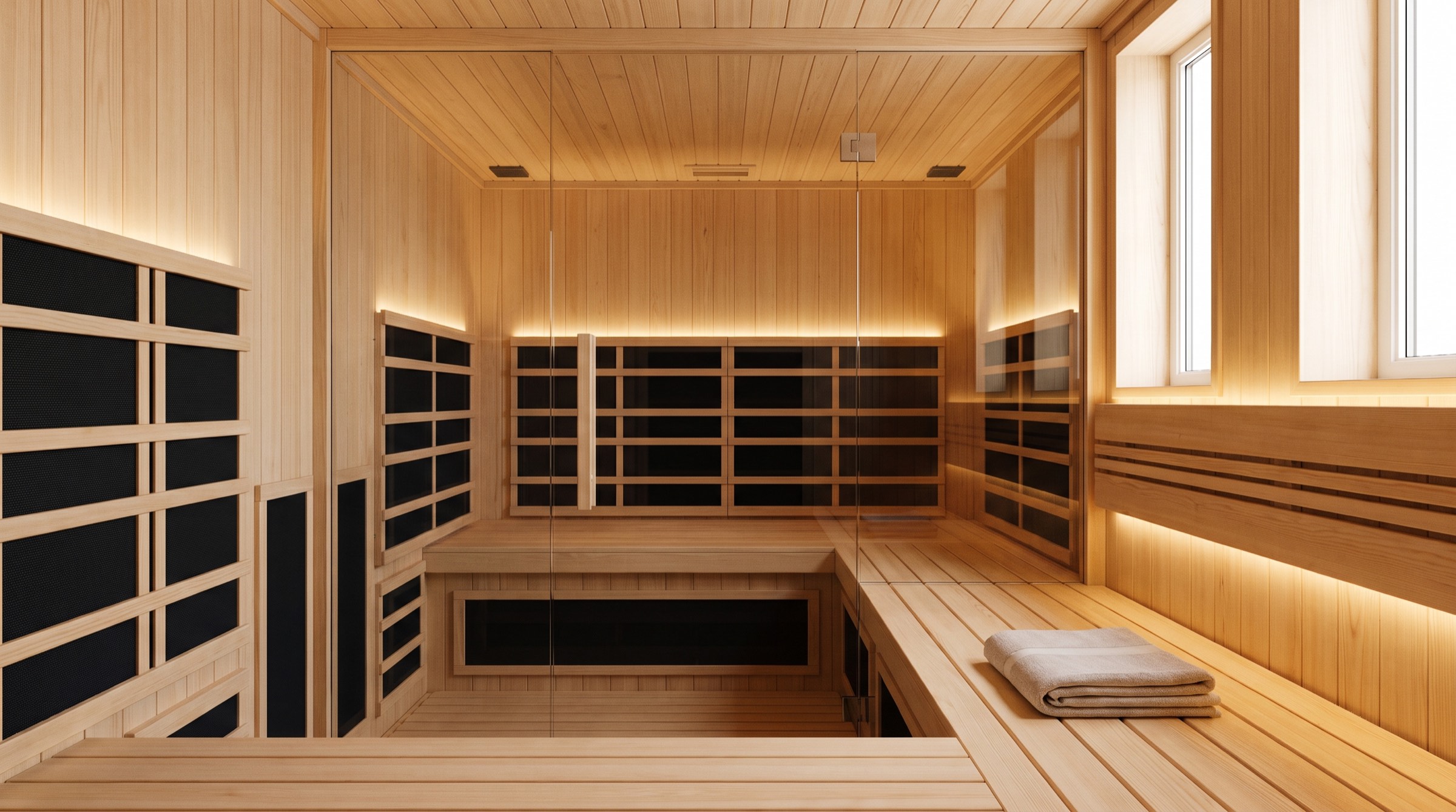
Infrared panels emit electromagnetic waves in the near, mid or far-infrared spectrum. Those waves are absorbed by your skin and underlying tissue, warming you directly. Because the cabin air stays cooler than a traditional sauna, infrared sessions tend to last longer (40–60 minutes versus 15–20 in a traditional sauna), and the experience is gentler.
Most home infrared cabins use a mix of far-infrared (longer wavelength, deeper penetration) and full-spectrum panels. “Full-spectrum” in UK marketing usually means a combination of near, mid and far-infrared in a single cabin, often at a premium price.
Infrared vs traditional at a glance
| Infrared | Traditional electric | |
|---|---|---|
| Air temperature | 45–65°C | 70–95°C |
| Typical session | 40–60 minutes | 15–20 minutes |
| Power supply | Standard 13A socket (1.6kW typical) | Dedicated 32A circuit |
| Running cost per session | 35–55p | £1.20–£1.60 |
| Ventilation | Not required | Required |
| Steam (löyly) | Not possible | Yes |
| Evidence base | Thinner — small studies | Stronger — large Finnish cohort studies |
Infrared vs traditional sauna — what the evidence actually says
Most of the published research on sauna and cardiovascular outcomes was done with traditional Finnish saunas (the Kuopio cohort studies, for example). The cardiovascular benefits associated with regular sauna use — reduced risk of cardiovascular mortality, lower blood pressure, and a lower recorded incidence of dementia — are strongest for traditional sauna bathing at 80°C+.
Research on infrared specifically is thinner. Some small studies suggest infrared can improve markers of cardiovascular function, reduce muscle soreness post-exercise, and help with chronic pain conditions — but the evidence base is smaller and the studies are typically less rigorous than the Finnish cohort work. Detox claims and weight-loss claims that you’ll see on infrared brochures are not supported by current research; ignore them.
The honest summary: traditional saunas have the better evidence base, but infrared is not a placebo — it does heat you up, it does produce a heart-rate response, and it does help with muscle recovery for plenty of users. If you’re buying primarily for the cardiovascular evidence, choose traditional. If you’re buying for low-effort recovery, comfort, or because you can’t tolerate a high-temperature traditional sauna, infrared is a reasonable choice. See our infrared vs traditional comparison for the detail.
Who infrared suits
Infrared makes most sense where space, budget or heat tolerance is the binding constraint.
- Buyers with limited space (most infrared units fit a 1–2m footprint with no ventilation required)
- Buyers on a tight installation budget (no 32A circuit; a standard 13A socket runs most home cabins)
- Buyers who can’t tolerate the 80°C+ heat of a traditional sauna
- Athletes using it primarily for muscle recovery after training
- Flats and rented homes — many infrared cabins are freestanding and don’t require any building work
Who should buy traditional instead
Traditional is the better buy in three situations.
- Buyers primarily motivated by the cardiovascular evidence
- Buyers who already enjoy traditional sauna use and know they prefer it
- Buyers wanting the steam (löyly) experience — you can’t do this with infrared
If that’s you, head to our home saunas or outdoor saunas guides.
Running costs in the UK
A typical 1.6kW home infrared cabin on a standard 13A socket costs around 35–55p per session in electricity at the current UK electricity price cap rate of about 28–30p/kWh. Compare this with £1.20–£1.60 for a traditional electric sauna session. Over a year of 3-times-a-week use, an infrared saves around £150 versus a traditional electric — meaningful, but not a deciding factor for most.
Sauna blankets — a budget alternative
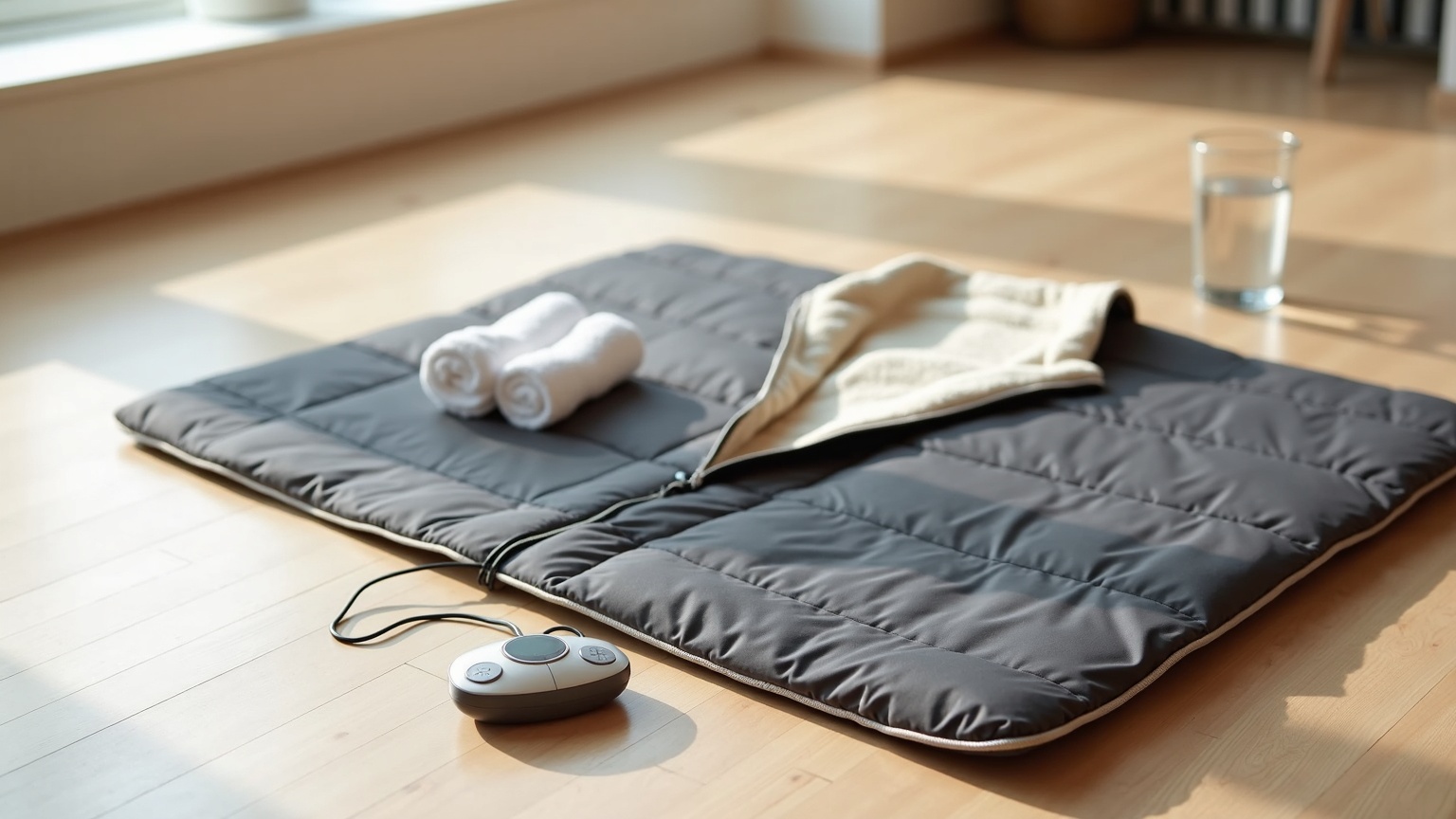
If you want the infrared experience without committing to a cabin, an infrared sauna blanket gives you most of the recovery benefit at a fraction of the price (£250–£800). They’re not a like-for-like substitute for a cabin (no social use, more cleanup, shorter durability), but for solo recovery use they’re an underrated option. We cover them in detail in our buying guides.
UK-available infrared brands worth a look
Our hands-on and research-backed picks live in the buying guides hub. Until our affiliate partnerships are confirmed, product links here point to the parent buying-guide article — click through for current recommendations.
Installation
Most home infrared cabins are designed for DIY assembly in 1–2 hours. They plug into a standard 13A socket — no electrician required for the typical 1.6kW unit. They don’t need ventilation work in the house. Two-person and four-person cabins are typically 1m×1m and 1.5m×1.2m respectively; check ceiling height clearance (most need ~190cm).
For larger or built-in installations, or if you want an infrared element added to a hybrid cabin, use our UK builder directory to find an installer.
Maintenance
Infrared cabins are low-maintenance. Wipe down after each session with a damp cloth. Avoid harsh chemical cleaners on the wood interior. The panels themselves have very long lifespans (15+ years for quality units) — the most likely failure point is the control electronics, so look for a unit with a published parts warranty.
Frequently asked questions
Are infrared saunas safe?
Yes, for healthy adults using them as directed. The infrared radiation involved is non-ionising — physically very different from UV or X-ray. As with any sauna, talk to your GP before regular use if you have a heart condition, are pregnant, or are on medication that affects blood pressure or sweating.
Do infrared saunas help with weight loss?
Not directly. You’ll lose water weight in a session — that comes back on the next glass of water. Any longer-term effect is at the margin of statistical significance and is dwarfed by diet and exercise. We do not recommend buying an infrared sauna for weight loss.
Can I install an infrared cabin in a flat?
Almost always yes. They don’t require ventilation, they plug into a standard socket, and they don’t release moisture. Check the floor loading if you’re above the ground floor, and check your tenancy agreement if you’re renting.
What temperature do infrared saunas reach?
Cabin air typically sits at 45–65°C, lower than a traditional sauna’s 70–95°C. The skin temperature you feel during use can be similar to a traditional sauna because of the direct infrared heating, but air temperature stays cooler.
About the author
Matt Tomkin is the editor of SaunaCentral, an independent UK guide to home and garden saunas. SaunaCentral does not sell saunas — we research the whole UK market and connect buyers with vetted builders through our builder directory. Running costs on this page assume the current Ofgem price cap. Where we describe health evidence we link the underlying peer-reviewed studies so you can read them yourself. Nothing here is medical advice — talk to your GP before regular sauna use if you have a heart condition, are pregnant, or take medication affecting blood pressure.
Related categories
- Home Saunas — the traditional indoor option
- Sauna Pods — design-led outdoor units
- Outdoor Saunas — the wider outdoor category
- Barrel Saunas — the cheapest traditional route
Want help choosing a specific unit? Browse our UK builder directory — many infrared specialists list there and can recommend a unit for your space.