
By Matt Tomkin, Editor, SaunaCentral — updated 27 July 2026.
In short: A garden sauna is a freestanding outdoor sauna sited in the garden rather than built into the house — usually a cabin, a barrel or a pod. The base is the part people underestimate: budget £300–£1,200 depending on whether you lay pavers, concrete or a timber deck, plus £400–£1,500 for a dedicated 32A circuit. Running costs are around £1.20–£1.60 a session, or roughly £20 a month for three sessions a week. Most garden saunas fall within permitted development and need no planning application.
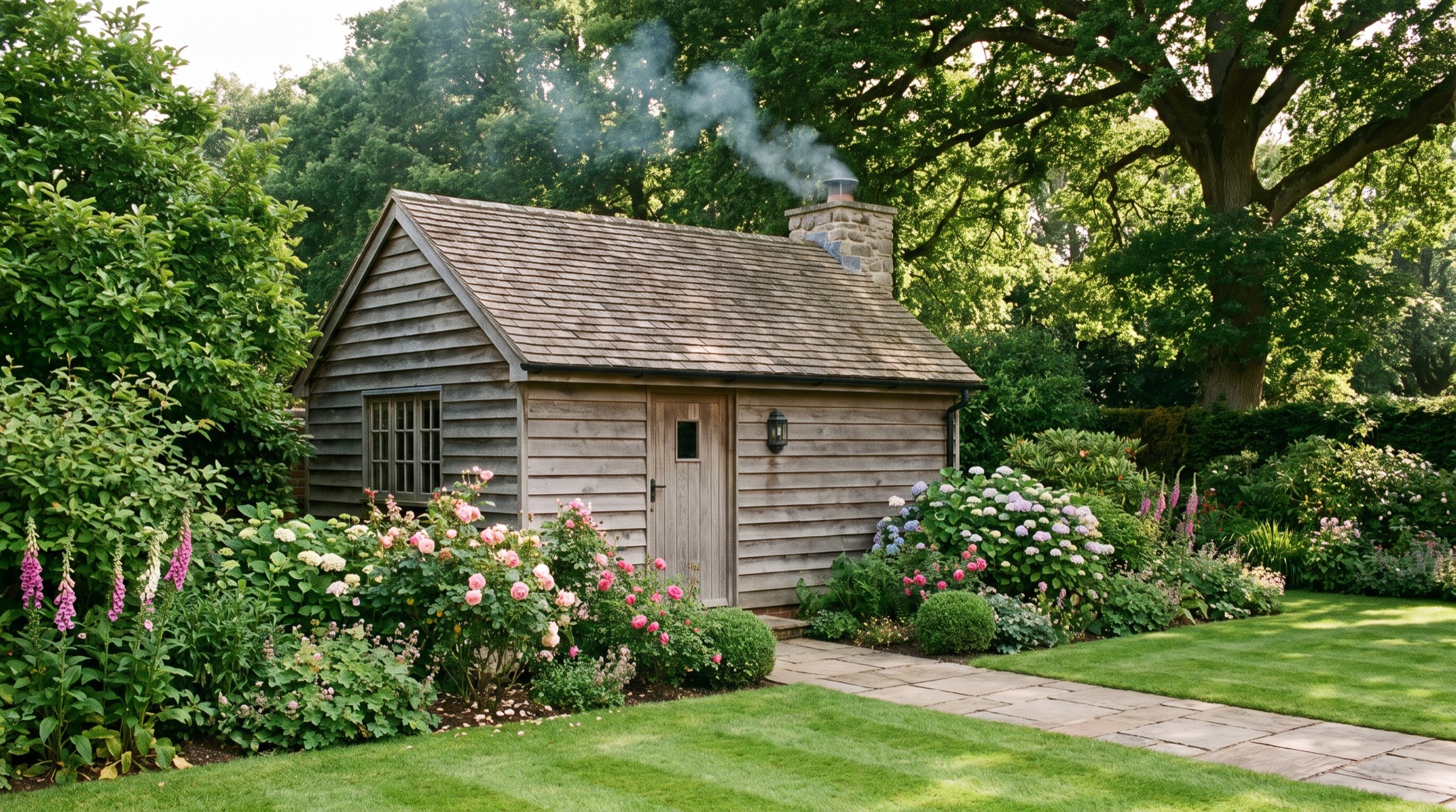
A garden sauna is the most popular form of outdoor sauna in the UK because it does the job without taking over the garden. A 4-person cabin sits on a footprint smaller than a single-bay shed, looks like part of a considered garden, and gives you the cold-out-warm-in experience that makes sauna ownership properly worth it.
This guide is for UK homeowners considering a garden sauna for the first time. We cover siting, base preparation, planning permission, electrical work, drainage, and the practical questions about getting a sauna into a typical British garden — including the ones with limited rear access.
What counts as a garden sauna
A garden sauna is any freestanding outdoor sauna sited in your garden rather than built into your house. The main types:
- Cabin saunas — square or rectangular cabins with a flat or pitched roof. Often have a porch or covered entry. The most popular UK shape. See outdoor saunas for the broader category.
- Barrel saunas — cylindrical units, usually 2m diameter. See barrel saunas.
- Pod saunas — sculptural, often glass-fronted modern units. See sauna pods.
- Custom builds — bespoke cabins designed to your garden by a UK sauna builder.
Choosing a spot in your garden
Three things matter for siting a garden sauna: base, power, and the walk from the house.
- Base. The ground needs to be level and load-bearing. Most cabin saunas weigh 400–1,200kg. A concrete slab, a deck of paving slabs on a compacted Type 1 sub-base, or a properly engineered timber platform all work. Soft lawn does not — it will move with the seasons.
- Power. The cable run from your consumer unit to the sauna location is often the most expensive single cost. Keep the cable run short, but not at the expense of the right spot. A typical 6kW sauna needs a dedicated 32A circuit.
- The walk from the house. The cold walk back from the sauna is half the experience. Walking through a kitchen window-view spot in a swimming costume in front of the neighbours is not. Most owners site the sauna at the far end of the garden with a clear (and screened, if needed) path back.
Base preparation in the UK
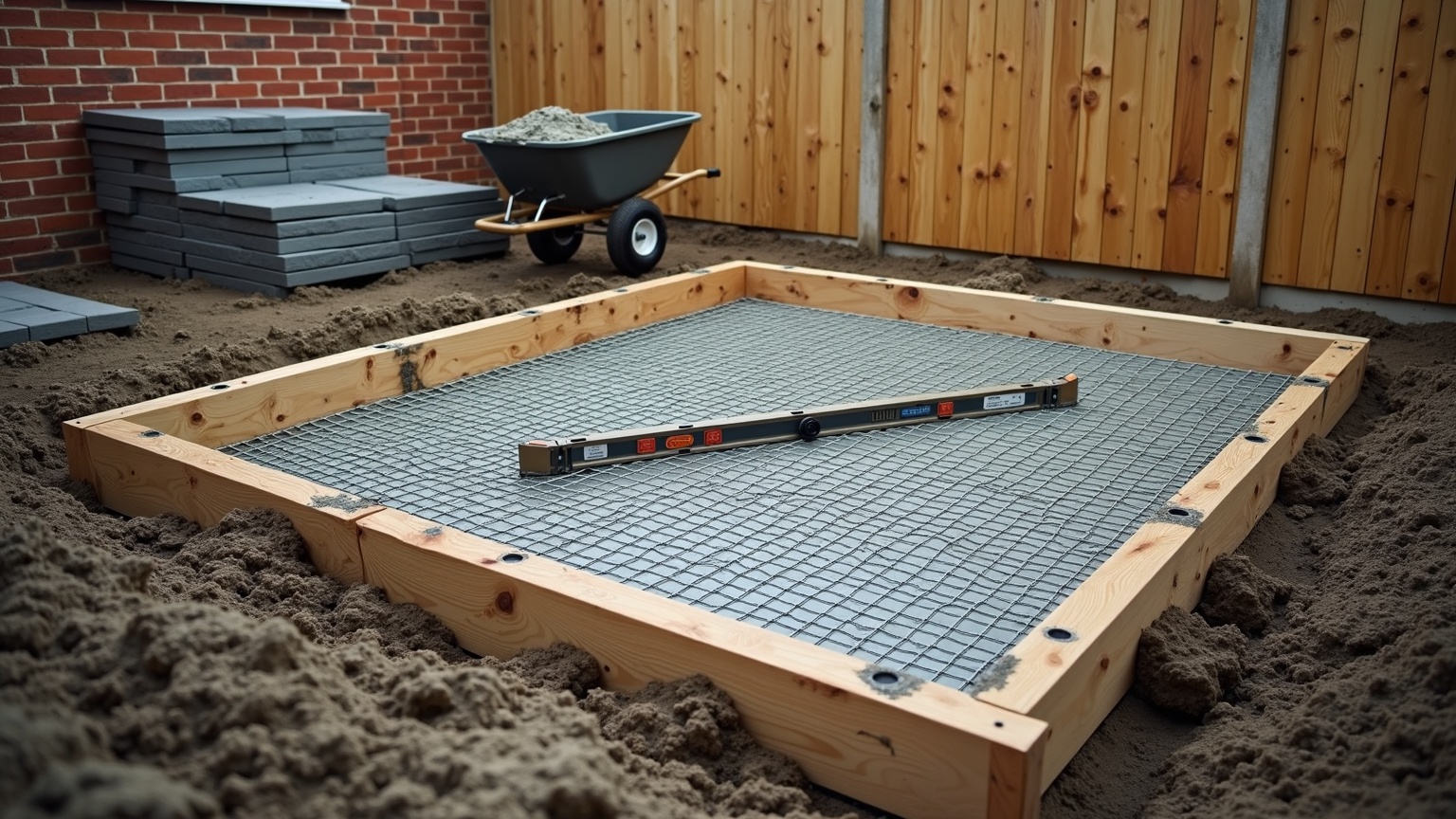
A garden sauna needs a level, load-bearing, free-draining base — UK ground is wet, and a cabin left sitting on soil will move with the seasons. Three approaches cover almost every British garden.
| Base type | Typical cost | Best for | Build-up and upkeep |
|---|---|---|---|
| Reinforced concrete pad | £400–£900 for 3×3m | The most robust option — cabins over 800kg | 100mm MOT Type 1 sub-base, DPM membrane, 100mm mesh-reinforced concrete. Lasts indefinitely. |
| Paver slab base | £300–£600 | Lighter cabins and most barrel saunas | Compacted Type 1, sharp sand, 50mm concrete pavers. Re-level every few years. |
| Engineered timber deck | £600–£1,200 | Looks the smartest of the three | Posts on concrete pads, joists, hardwood or composite deck. Not suitable for the heaviest cabins — check the supplier’s maximum point loading. |
Planning permission
Most garden saunas fall within permitted development in England (similar rules apply in Wales; Scotland and Northern Ireland have their own legislation). The standard tests:
- Less than 50% of the total garden covered by outbuildings;
- Not in front of the principal elevation of the house;
- Single storey, max eaves height 2.5m if within 2m of a boundary;
- Max total height 4m for dual-pitched roof, 3m otherwise;
- No verandahs, balconies or raised platforms.
Conservation areas, listed buildings and houses subject to an Article 4 direction often need full planning permission. Wood-fired saunas need additional attention to flue routing. Always check with your local authority before ordering.
Electrical work
A 6kW electric heater needs a dedicated 32A radial circuit on its own RCD. Larger heaters (8–9kW for bigger cabins) may need 40A. The cable from your consumer unit to the cabin is typically buried in a trench at 600mm depth (or surface-mounted in armoured conduit). Budget £400–£1,500 for the electrical work depending on cable run length and whether a trench is needed. Always use an electrician competent under Part P of the building regulations and notify the work to your local authority.
Drainage
Most garden saunas don’t need plumbed drainage — a tile floor with a tray, or a wooden duckboard floor over a sealed base, handles the bit of water that ends up on the floor. If you want a shower in the cabin (rare but lovely), that’s a different conversation — you’ll need a soakaway or connection to your foul drainage. A sauna builder can advise.
Getting it into a tight garden
Access is the constraint that catches people out: many British gardens have a narrow side passage as the only route to the rear. A flat-packed barrel can be carried through almost any side path. A pre-built cabin or pod may need crane access (£300–£800 for a half-day crane in most parts of the UK). Have a tape measure ready before you order — check your side passage and any rear access gate.
Running costs and use
A garden sauna costs roughly £1.20–£1.60 per session to run, or around £20 a month for three sessions a week, at the current UK electricity price cap rate of about 28–30p/kWh. Most owners use them year-round; the cold months are when they shine. Our installation guides have a dedicated article on running costs by sauna type.
Recommended garden saunas
Our 2026 picks live in the buying guides hub. We don’t recommend a single “best” — the right unit depends on your garden, budget, and whether you’re after barrel, cabin or pod. Until our affiliate partnerships are confirmed, product links route to the parent buying-guide article.
Frequently asked questions
How long does a garden sauna last?
A well-built cedar or thermo-wood unit with annual maintenance should last 15–25 years. The heater is typically the first thing to need replacing (8–12 years for an electric).
Can I put a garden sauna under a tree?
Not under a tree directly — falling debris, sap, and root movement all cause problems. A clearing with overhead cover from a fence or neighbouring structure is fine. Allow 0.5m clearance to any vegetation.
Does a garden sauna need insurance?
Most UK home insurers cover outbuildings as standard up to a value — typically £5,000–£10,000. Notify your insurer of the addition and check whether you need a specific extension for higher-value or wood-fired units.
Can I move a garden sauna later?
Barrel saunas can be moved by 4–6 people if the bands are released and the staves disassembled — a half-day job. Cabin saunas are usually built on-site or pre-assembled and cannot easily be relocated.
About the author
Matt Tomkin is the editor of SaunaCentral, an independent UK guide to home and garden saunas. SaunaCentral does not sell saunas — we research the whole UK market, talk to installers, and connect buyers with vetted builders through our builder directory. Costs on this page are 2026 UK prices, running costs assume the current Ofgem price cap, and the planning guidance follows permitted development rules for outbuildings in England.
Related categories
- Outdoor Saunas — the wider category
- Barrel Saunas — the cheapest garden option
- Sauna Pods — compact, design-led units
- Home Saunas — the indoor alternative
Need a UK installer? Browse our directory of vetted UK garden sauna builders.