
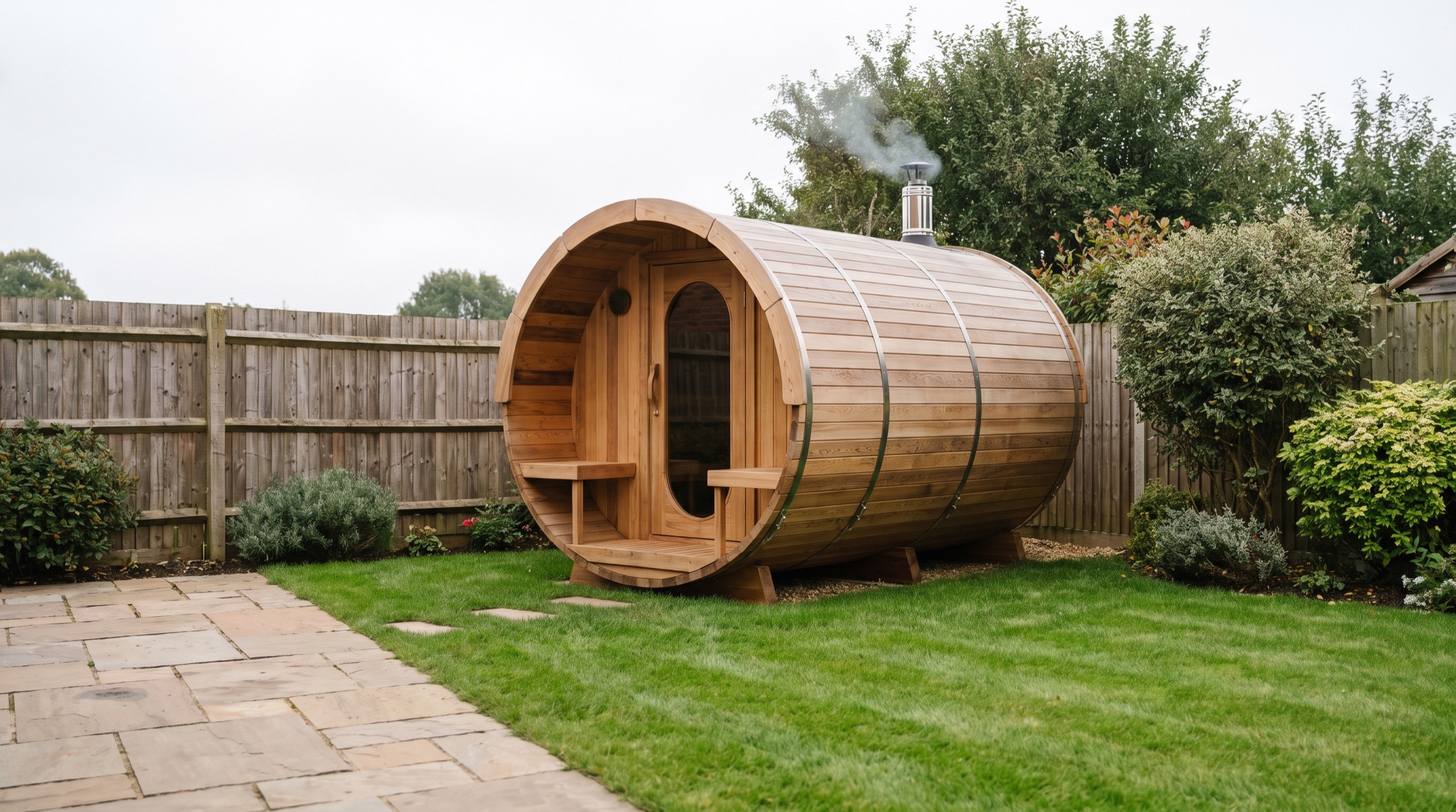
By Matt Tomkin, Editor, SaunaCentral — updated 1 July 2026.
In short: A barrel sauna is a cylindrical outdoor sauna built from curved timber staves held together by steel bands and laid on its side. It’s the cheapest, fastest-heating and easiest-to-assemble outdoor sauna shape sold in the UK — 2-to-8-person models cost roughly £3,000–£18,000, and an electric one costs around £1.20–£1.60 per session to run.
A barrel sauna is the most forgiving way to get into outdoor sauna ownership. The shape is structurally efficient — the curved roof sheds rain, the staves resist twisting, and the round profile heats up faster than a cube of the same volume. They’re also the cheapest entry into a properly built outdoor sauna, the easiest to assemble, and they happen to look right in nine out of ten British gardens.
This guide covers what to look for in a barrel sauna, how the cheap ones differ from the well-built ones, what installation actually involves, and what to expect to pay in the UK in 2026.
Why barrel shape
A barrel sauna is structurally a wooden cylinder lying on its side. The shape has three real-world benefits:
- Heat efficiency. The internal volume of a barrel is around 30% smaller than a cube cabin of equivalent footprint. Less air to heat means a 30–40% faster warm-up — typically 25–35 minutes from cold for a 6kW heater.
- Weather resistance. The curved roof has no flat sections to pool water. UK rain runs off cleanly.
- Cost. Fewer joints, simpler construction, and high-volume Eastern European production make barrel saunas the cheapest properly-built outdoor sauna shape.
What to look for in a UK-sold barrel sauna
- Wood species. Western red cedar is the classic — naturally rot-resistant, weathers to silver, gentle on the skin at temperature. Thermo-wood (typically thermally treated Scots pine or spruce) is more durable in UK damp and around 30% cheaper. Avoid untreated softwood barrels at the bottom of the market.
- Stave thickness. 40mm or thicker for good thermal performance and durability. 28mm staves (common on the cheapest units) cool faster and warp more.
- Bands. Galvanised steel bands, ideally with stainless steel ratchet tensioners. Plain mild steel rusts within a couple of UK winters.
- Door. Tempered glass with a sturdy frame. Cheap units use 6mm glass on a single hinge; a quality unit uses 8mm with two hinges and a proper magnetic latch.
- Heater. A 6kW electric Harvia, Tylö, or Huum is the safe choice for a 4-person barrel. Avoid generic-brand heaters with no UK service network.
- Interior fittings. Cedar or aspen benches, cedar backrests, a properly heat-resistant LED light. The cheapest units skip the backrests and use plastic light fittings that warp.
Sizes and capacities
Barrel saunas are sold by length. Here’s how the common UK sizes compare on capacity, heater rating and price.
| Barrel length | Capacity | Heater | Typical UK price | Notes |
|---|---|---|---|---|
| 1.6m | 2 people | 4.5kW | £3,000–£5,500 | Compact and quick to heat |
| 2.0m | 4 people | 6kW | £4,500–£8,500 | The most common UK size |
| 2.4m | 6 people | 8kW | £6,500–£12,000 | Needs more base prep and a bigger circuit |
| 3.0m+ | 8 people | 8kW+ | £9,000–£18,000 | Usually with a porch; effectively commercial-grade |
Electric vs wood-fired barrel
For most UK gardens, an electric barrel sauna is the practical choice — a wood-fired barrel suits off-grid spots and buyers who want the ritual of a real fire. Electric barrels are easier in every way except that experience. They warm up faster, switch on from your phone if you spec smart controls, and need no ongoing fuel. A wood-fired barrel needs a flue (with related distance-to-boundary rules), seasoned dry hardwood, and active management during the session — but it gives you the smoke-and-snap experience that’s the whole point for some buyers.
| Electric barrel | Wood-fired barrel | |
|---|---|---|
| Warm-up time | 25–35 min (6kW) | 30–45 min |
| Running cost | ~£1.20–£1.60 per session | Cost of seasoned hardwood logs |
| Setup needed | Dedicated 32A circuit | Flue + distance-to-boundary clearance |
| During the session | Set and forget; smart controls optional | Active fire management |
| Experience | Clean and consistent | Smoke, crackle and authenticity |
| Best for | Convenience and frequent use | Off-grid spots and purists |
See our wood-fired vs electric comparison for the full breakdown.

Installation
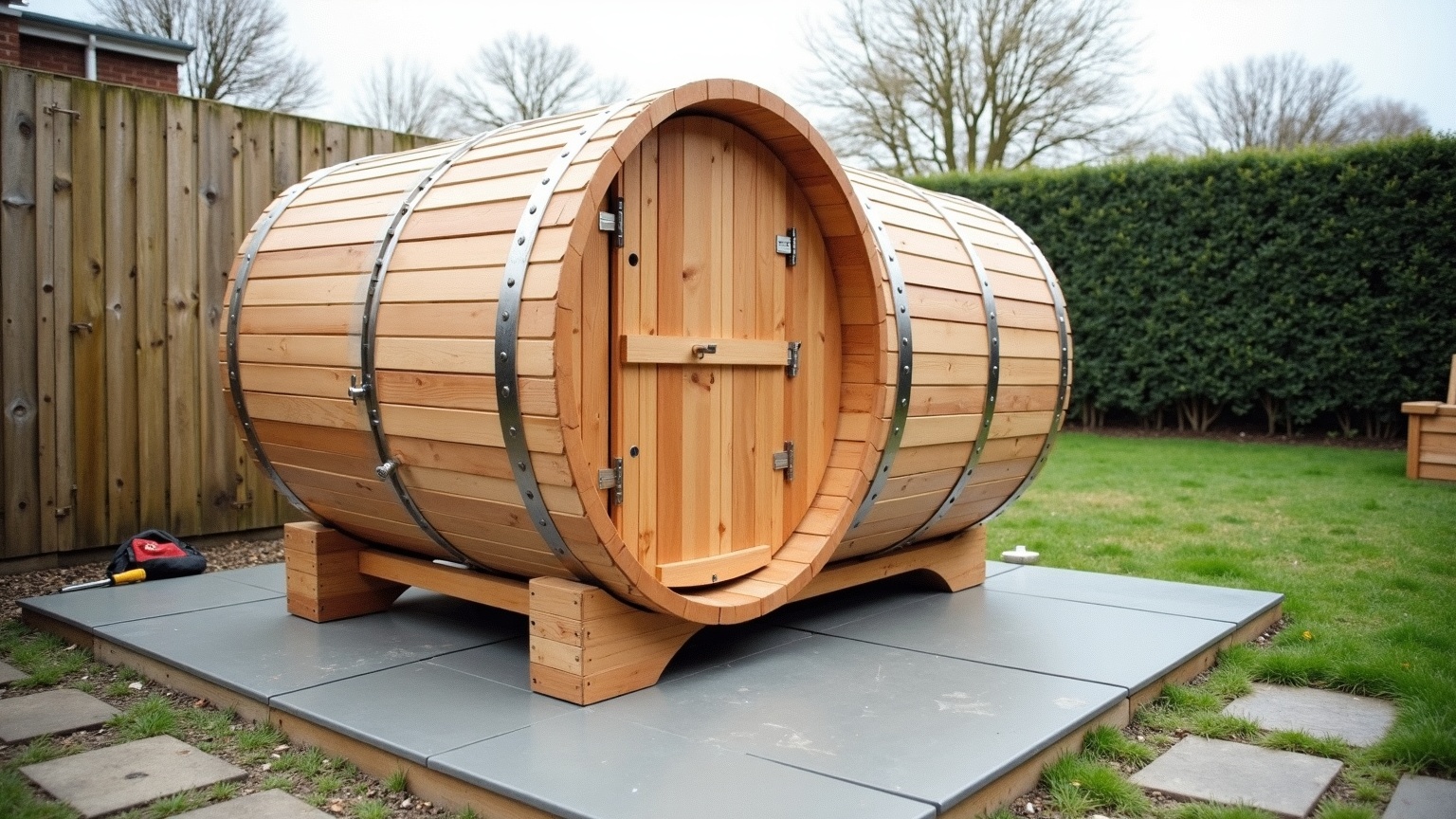
Installing a barrel sauna comes down to two things: a firm, level base and a dedicated electrical supply. A 2m barrel sauna typically arrives on a pallet in 6–8 staves plus the bands, end walls, door, benches and heater. Assembly takes two competent people a working day. Most need a level base (paver slabs on Type 1 sub-base is the most common approach) and a dedicated 32A electric circuit for a 6kW heater. Our installation hub covers each step.
If you’d rather not assemble it yourself, use our UK builder directory to find a local installer who’ll handle base prep, assembly, and electrics as a single quote — typically £600–£1,200 on top of the unit price.
Running costs
A 6kW electric barrel sauna costs around £1.20–£1.60 per session at the current UK electricity price cap rate of roughly 28–30p/kWh, including warm-up and a typical 60-minute session. Three sessions a week comes to roughly £18 a month.
Maintenance
A barrel sauna needs only about an hour of upkeep a year. Once a year: re-tension the bands (they relax slightly as the wood seasons), oil the cedar if you want to hold the warm tone, sweep the chimney if wood-fired. Check the seals, the door alignment, and the heater rocks for fracturing. Replace the rocks every 2–3 years if used heavily.
Recommended barrel saunas
Our 2026 picks for the UK market are in the buying guides hub — we cover the cedar barrel category, the budget thermo-wood category, and the premium glass-fronted category separately. Until our affiliate partnerships are confirmed, links route to the parent guide.
Frequently asked questions
Are barrel saunas worth it?
For most UK first-time outdoor sauna buyers, yes. They’re cheaper, faster to heat, easier to install and easier to maintain than cabin saunas of comparable spec. The trade-off is internal space — a barrel feels cozier than a cube of equivalent footprint. If you want to sit up tall or fit larger groups, look at cabin garden saunas.
Do barrel saunas leak?
A properly built and properly tensioned cedar or thermo-wood barrel does not leak. The wood swells slightly as humidity rises, sealing the joints. Leaks in the first season are normal and stop once the wood settles. Persistent leaks usually indicate under-tensioned bands or a cracked stave — both are fixable.
Cedar or thermo-wood?
Cedar looks better, smells better, and weathers more attractively. Thermo-wood is more dimensionally stable in UK damp and 20–30% cheaper. If budget is tight, thermo-wood is the smart buy. If you’ll oil it every year and you love the wood, go cedar.
Can I put a barrel sauna on grass?
Short-term yes; long-term no. Lawns hold moisture, settle unevenly, and rot the timber sleepers most barrels arrive on. Always put a barrel on a proper base.
About the author
Matt Tomkin is the editor of SaunaCentral, an independent UK guide to home and garden saunas. SaunaCentral doesn’t sell saunas — we research the whole UK market, talk to installers, and connect buyers with vetted builders through our builder directory. Pricing and running-cost figures on this page are based on 2026 UK retail prices and an electricity rate of 28–30p/kWh.
Related categories
Ready to talk to a UK installer? Browse our directory — most barrel sauna specialists offer fixed-price installation including base prep.