
By Matt Tomkin, Editor, SaunaCentral — updated 27 July 2026.
In short: A sauna pod is a sculptural outdoor sauna — usually an oval, teardrop or rounded cube, very often with a large glass front. UK prices run £6,000–£30,000 depending on shape and build quality, which is roughly a 30–80% premium over a barrel of the same capacity. The premium buys the look, not more space. Two practical constraints decide whether a pod is viable in your garden: it usually arrives pre-assembled and needs crane access, and it needs a reinforced base rather than paving slabs. Running costs are about £1.40–£1.90 a session.
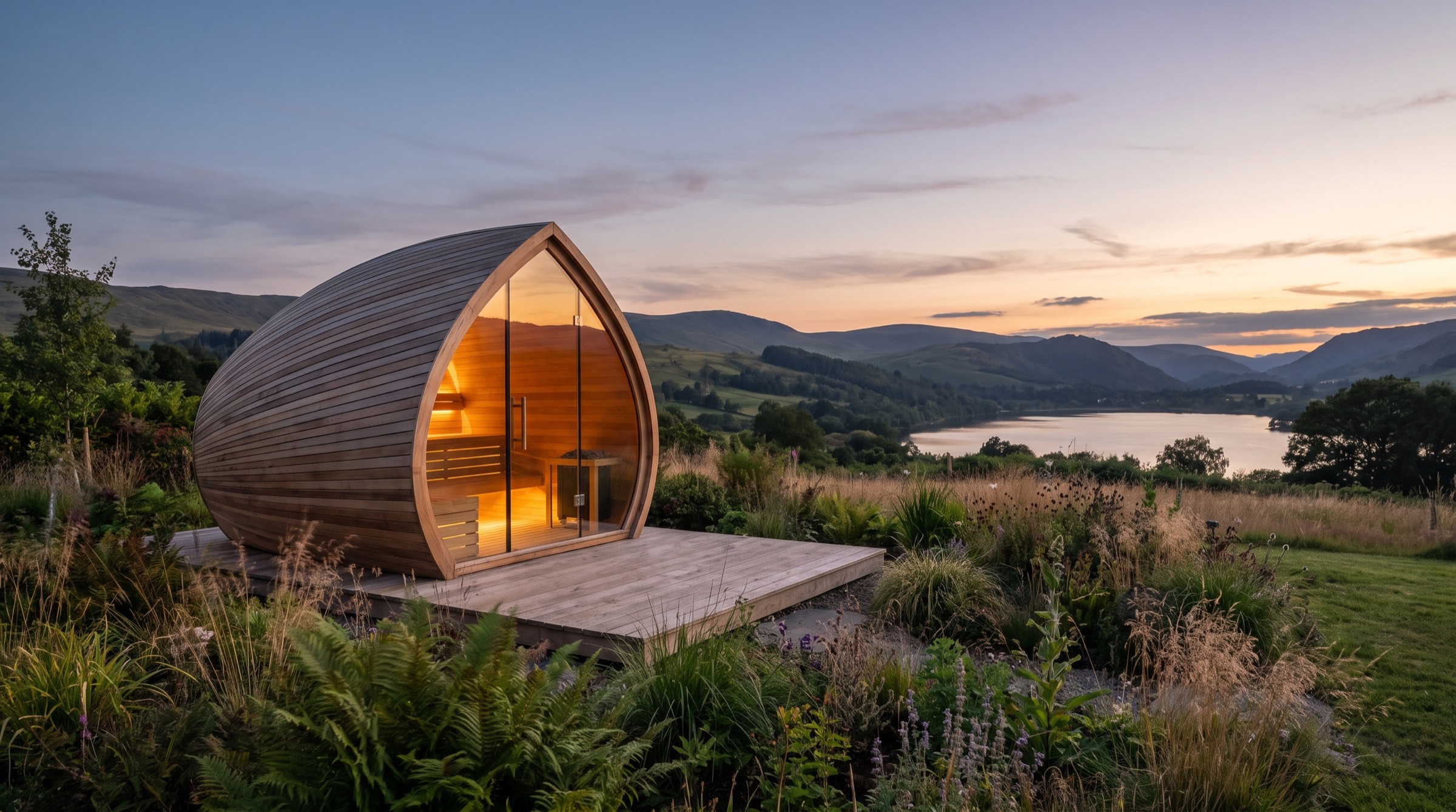
A sauna pod is a sculptural outdoor sauna — usually somewhere between an oval and a teardrop, often with a large glass front, and almost always priced as a design object rather than a commodity. They’re the most photogenic shape of outdoor sauna. They’re also the most variable in build quality, the most expensive per cubic metre of useful interior, and the trickiest to install in a typical British garden.
This guide separates the genuinely well-built UK-available pods from the cheaper imported units that look the same in photos and live very different lives in a wet British winter.
What counts as a sauna pod
Pods are defined by silhouette rather than function — four shapes cover most of the UK market.
| Shape | Typical price | Character |
|---|---|---|
| Teardrop / egg | £8,000–£25,000 | Asymmetric oval profile, often with a glass entry wall. The most distinctive shape, and the most likely to become a garden centrepiece. |
| Quad / square-cornered | £6,000–£15,000 | A cube with rounded edges, usually clad in vertical timber. |
| Round / drum | £7,000–£14,000 | Cylindrical, with a flat rather than curved roof. |
| Cube with full glass front | £10,000–£30,000 | Modern, gallery-style. |
Smaller barrel-style pods (sometimes marketed as “pods” rather than barrels) overlap with the barrel category.
What you’re paying for
Pod prices span a factor of five for units that photograph almost identically. Five things account for most of the difference.
| Component | What a well-built pod uses | What a budget pod uses |
|---|---|---|
| Glass | Tempered or laminated 8–10mm in heat-rated frames | 6mm domestic glazing, which tolerates temperature shock less well |
| Frame and shell | Steam-bent solid timber ribs; CNC-cut plywood ribs are the mid-market option | Glued segment construction |
| External cladding | Vertical thermo-wood battens with a UV-stable finish | Untreated softwood — UK weather is unkind to it |
| Heater | A reputable 6–8kW unit (Harvia, Tylö, Huum) | Generic-brand heater with no UK service network |
| Interior finish | Cedar or aspen benches with hidden fixings, integrated lighting, water-resistant flooring | — |
Installation considerations specific to pods
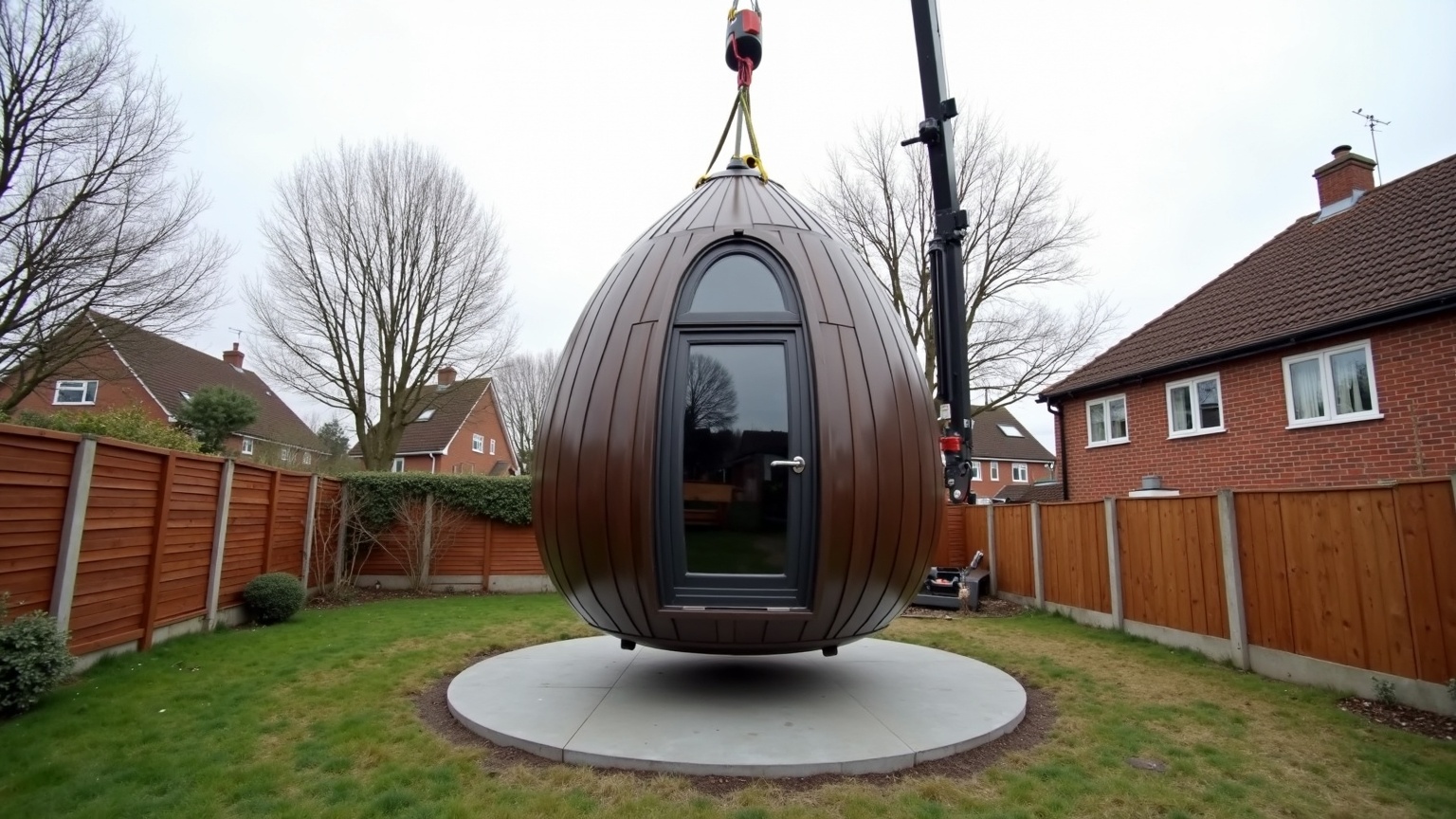
Pods are typically delivered pre-assembled, on a flatbed lorry, and craned into place. This has consequences:
- Access. Most UK gardens don’t have rear vehicle access. Either you have a wide side passage (rare), front access through the house (impossible for a pod), or a crane (£300–£800 for a half-day in most parts of the UK). Check before ordering.
- Base. Pods are heavy (typically 600–1,400kg) and concentrated on a small footprint. Most need a reinforced concrete pad or a properly engineered timber platform. A standard paver slab base is not usually adequate.
- Levelling. Pods are far less forgiving of an out-of-level base than a barrel. The door may not close if the unit is off by more than 5mm over 2m. Be precise.
Glass-fronted pods in UK weather
The big glass front is the reason most people buy a pod. It also has consequences. The glass is the worst thermal element of the cabin, so a glass-fronted pod takes 5–10 minutes longer to warm up and runs slightly more expensively than an opaque-walled equivalent. Condensation on the outside of the glass on cold UK days is normal and harmless. The seal between the glass and the frame is the most common failure point at 5–10 years; check the warranty terms.
Planning permission
Pods fall within the same permitted development rules as other outbuildings in England: 50% garden coverage limit, not in front of the principal elevation, 2.5m eaves height within 2m of a boundary, total height 3m (or 4m for dual-pitched). Pods with curved roofs are typically treated as “other” under the 3m limit. Conservation areas and listed buildings need full planning permission. See our installation hub for the detail.
Running costs
A glass-fronted 6kW pod costs around £1.40–£1.90 per session to run at the current UK electricity price cap rate of about 28–30p/kWh — slightly higher than an equivalent opaque cabin because of the heat loss through glass. Three sessions a week: roughly £22 a month.
Recommended sauna pods
Our 2026 picks for the UK market are in the buying guides hub. We cover three tiers separately: design-led premium (£15k+), mid-market sculptural (£8–15k), and value pods (under £8k). Until our affiliate partnerships are confirmed, links route to the parent guides.
Frequently asked questions
Are sauna pods worth the extra cost?
Compared to a barrel of similar capacity, you typically pay 30–80% more for a pod. The premium is for the look. If aesthetics matter — particularly if the sauna is visible from the house and you want it to be a feature — a well-built pod is money well spent. If you mostly care about the experience, a barrel sauna gives you 95% of it for less money.
Can a pod be sited under a tree?
Not directly. The curved roof sheds rain well but sap, falling debris and root movement cause problems. Allow at least 1m clearance from any overhanging branches.
How long do pods last?
A well-built thermo-wood pod with annual maintenance and proper sealing should last 15–25 years, similar to a quality barrel. The glass-to-frame seal is typically the first major maintenance item, at 8–12 years.
Are pods bigger inside than a barrel?
Not usually — most pods have similar useful internal volume to a barrel of the same external footprint. The benefit of a pod over a barrel is shape and aesthetic; the benefit of a barrel over a pod is cost.
About the author
Matt Tomkin is the editor of SaunaCentral, an independent UK guide to home and garden saunas. SaunaCentral does not sell saunas — we research the whole UK market, talk to installers, and connect buyers with vetted builders through our builder directory. Prices on this page are 2026 UK figures, running costs assume the current Ofgem price cap, and the planning guidance follows permitted development rules for outbuildings in England.
Related categories
- Outdoor Saunas — the wider category
- Garden Saunas — cabin-style garden builds
- Barrel Saunas — the cheaper alternative to a pod
- Home Saunas — the indoor option
Looking for someone to design and install a custom pod? Browse our UK builder directory — several listed builders specialise in bespoke pod designs.